It's not just rubbing: pressing, massaging and other eye habits worth mentioning

If you have keratoconus, you have almost certainly been told not to rub your eyes. But what about pressing on tired eyes with the heel of your hand, massaging the inner corner near your nose, or leaning your knuckles into your eyelids while you think? A questionnaire study from Japan, published ahead of print in Eye & Contact Lens in 2026, asked people with keratoconus about all of these habits, not only rubbing.
One thing to say up front: we could only read the published abstract and the author details, not the full paper. Everything below comes from that summary, and we list what we could not check further down.
What the study did
The researchers recruited Japanese outpatients who had a clinical diagnosis of keratoconus in at least one eye. Each person filled in a structured questionnaire written by the investigators, then had a face-to-face interview with a doctor. The questions covered current and past habits: whether they touched or pressed on their eyes, why, for how many years, how often, with which part of the hand, and where on or around the eye.
The authors use the term mechanical ocular stimulation for this wider group of behaviours. It is a deliberately broad label that takes in rubbing, pressing and massaging.
What it found
A total of 304 people were included. The headline numbers from the abstract are:
- 91.4% reported some form of mechanical ocular stimulation.
- The habits were usually long-standing: 75.9% had been doing them for more than 10 years.
- Itchy eyes were the most common trigger, reported by 75.9%. The authors add that many behaviours were unrelated to itching.
- The pad of the finger (56.1%) and the knuckles (48.6%) were commonly used.
- The inner corner of the eye, next to the nose, was the most commonly involved site (70.1%, P<0.05).
- Pressure-type habits, such as pressing on or massaging the eyes when tired, were reported by approximately one third of patients.
A P-value is the probability of seeing a difference this large if there were really no difference; below 0.05 is the usual threshold for "unlikely to be chance". The abstract does not say exactly which comparison it applies to, so we would not read much into it.
There are no between-group results to report, because there was only one group. Everyone in the study had keratoconus.
Why "not just rubbing" matters
The useful idea here is about the question, not the percentages. If an optometrist asks "do you rub your eyes?" and you answer "no", that can be an honest answer that still misses something. You may not think of pressing your palms into your eyes at the end of a long day as rubbing.
The study suggests these habits are common among people with keratoconus, that they often go back many years, and that itch is a frequent reason but not the only one. The authors conclude that asking more broadly about current and past behaviours may improve assessment and counselling.
We have already written about the links between allergy, itch and eye rubbing in keratoconus, so we will not repeat it here. You can read that in our earlier post on eczema, asthma, hay fever and keratoconus.
What the studies can't tell us
This is a prevalence finding. It tells us how many people in one clinic group reported a habit. It cannot show that the habit caused their keratoconus or made it worse.
- No control group. Nobody without keratoconus was asked the same questions. Plenty of people with healthy corneas touch, press and rub their eyes too, so we cannot say from this study whether 91.4% is unusually high.
- Self-reported recall. People were asked to remember habits going back more than a decade. People who have been told many times that rubbing matters may also recall, or report, these habits differently.
- Cause and effect are not tested. A one-off questionnaire cannot tell whether pressing came first, or whether an uncomfortable, irritated eye led to more touching.
- One population. All participants were Japanese outpatients at a specialist setting. The figures may differ elsewhere, including in New Zealand.
- An investigator-developed questionnaire. The abstract does not describe whether it was validated.
- Industry affiliation. According to the PubMed author details, one author is affiliated with SEED Co., Ltd, a contact lens company, as well as a university department. The abstract does not include a funding or conflict of interest statement, so we cannot say more than that.
- Abstract only. We could not check the participants' ages or disease severity, how people were recruited, the exact wording of the questions, the denominators behind each percentage, whether any habit was linked to more advanced disease, or the full statistical methods.
What this means for you in Hamilton
You do not need to feel guilty about any of this. Touching your eyes when they itch or ache is a very human thing to do, and this study does not show that any one habit caused your keratoconus. It is still sensible to mention these habits, because your optometrist can only help with what they know about. At your next visit, it may help to mention:
- pressing or massaging your eyes when tired, not only rubbing when itchy
- which hand, and whether you use fingertips, knuckles or the palm
- habits from years ago, including childhood
- what sets it off: itch, tiredness, screen time, taking lenses out, or nothing in particular
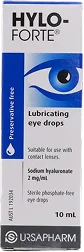
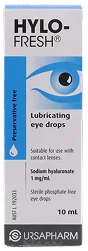
If itch is the main driver, managing the itch is usually an easier first step than willpower. Lubricating or allergy drops are options to discuss with your optometrist. Hylo-Dual preservative-free drops and Cromo-Fresh allergy eye drops are available from the Rose Optometry online store. They are not treatments for keratoconus, and they were not tested in this study.
For keratoconus care itself, the front door is a keratoconus-focused optometrist. That is who diagnoses the condition, tracks it with repeated corneal maps over time, fits scleral lenses when glasses are no longer enough, and refers you to an ophthalmologist at the right moment if the maps show progression and corneal cross-linking is worth considering. Cross-linking is performed by an ophthalmologist, but the monitoring that tells you whether you need it starts with your optometrist.
The optometrist team at Rose Optometry in Hamilton provides keratoconus care, including corneal mapping and specialty lens fitting. If you would like your corneas checked or your habits talked through, you can book a keratoconus assessment. The optometrists at Rose Optometry are Anjali Hira, Emilie Lawson, Jacqueline Rowe, Jagrut Lallu, Jason Shen, Jessica Wood and Stella Wong, and keratoconus care is part of their clinical practice.
Reference
- Koh S, Inoue R, Gatinel D, Nishida K. Beyond Eye Rubbing: Mechanical Ocular Stimulation Is Highly Prevalent in Keratoconus. Eye & Contact Lens. 2026 (published ahead of print, 29 September 2026). PMID 42809759. https://doi.org/10.1097/ICL.0000000000001311